BPC-157: What the Research Says About Tissue Regeneration
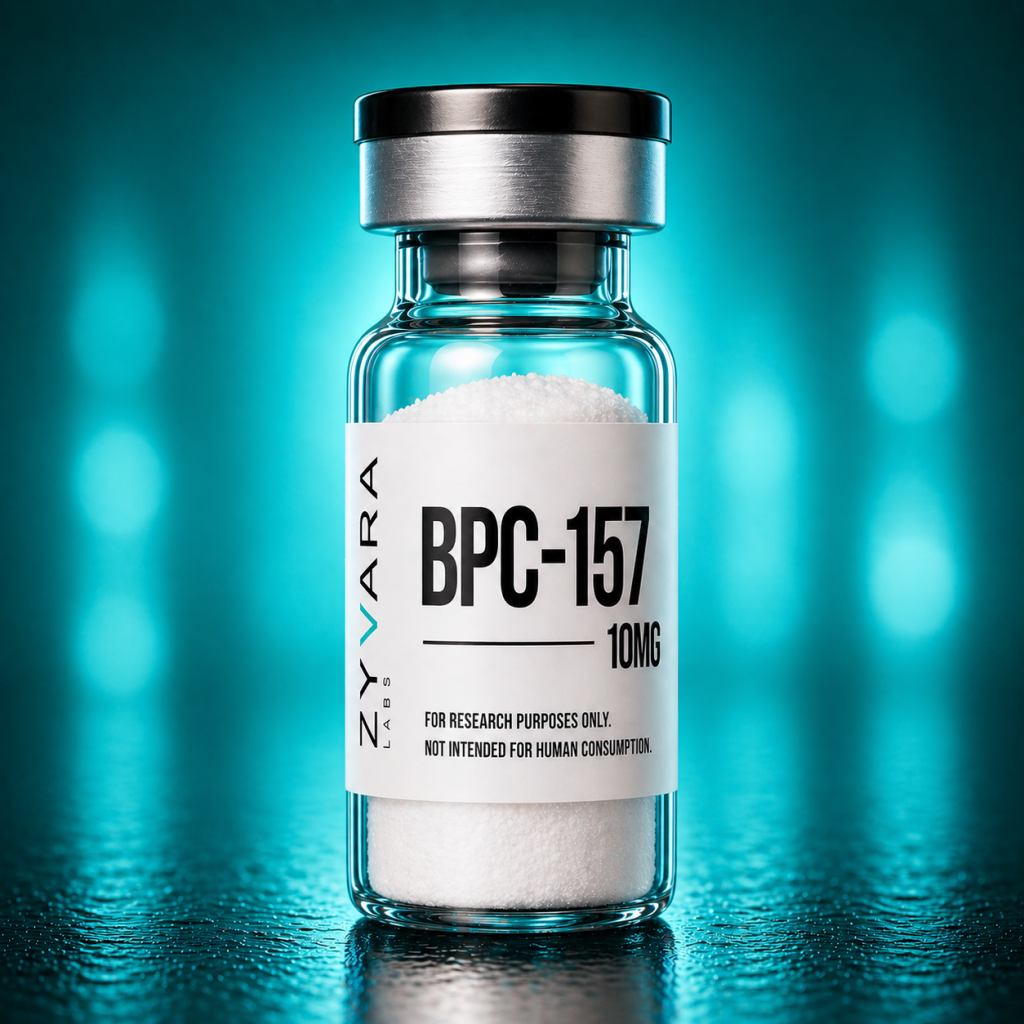
For Research Purposes Only. Not intended for human consumption.
BPC-157 (Body Protection Compound-157) is among the most studied synthetic peptides in preclinical literature, with over 47 published studies examining its behavior across multiple biological systems. This post summarizes key areas of published research.
What Is BPC-157?
BPC-157 is a synthetic pentadecapeptide — a chain of 15 amino acids — derived from a protective protein naturally occurring in gastric juice. It was first isolated and synthesized for research purposes in the early 1990s and has since become a widely referenced compound in regenerative biology research.
Key Research Areas
Musculoskeletal tissue research has produced some of the most cited findings around BPC-157. Studies in rodent models have examined its behavior in tendon-to-bone healing, ligament repair, and muscle tissue recovery following injury. Researchers have noted interactions with the nitric oxide pathway, which plays a significant role in vascular function and tissue oxygenation.
Gastrointestinal research represents another substantial body of work. As a derivative of a gastric protein, BPC-157 has been examined in models of intestinal inflammation, ulceration, and mucosal repair. Studies have looked at its apparent cytoprotective properties across both upper and lower GI tissue.
Neurological research has explored BPC-157’s behavior in models of dopamine and serotonin pathway modulation, as well as traumatic brain injury models. Early preclinical findings have prompted continued interest in its interaction with neurotransmitter systems.
Angiogenesis research has examined BPC-157’s apparent role in promoting new blood vessel formation, which researchers propose may contribute to its observed effects in tissue repair models.
Research Specifications
Zyvara Labs BPC-157 is synthesized as a lyophilized powder with ≥99% purity as verified by independent HPLC testing. Each lot is tested by a US third-party laboratory with a publicly posted Certificate of Analysis.
Disclaimer
This post summarizes publicly available preclinical research only. BPC-157 has not been evaluated or approved by the FDA. It is not intended to diagnose, treat, cure, or prevent any condition. For laboratory research use only.